

Sidi Saiyyed Mosque, also known as Sidi Saiyad Mosque, near Lal Darwaja in Ahmedabad, is renowned for its carved stone latticework, or jalis. The mosque’s screens make this a distinctive stop among Ahmedabad monuments, while its history connects the landmark to the city’s 16th-century past.
- Location: Near Lal Darwaja, Ahmedabad, Gujarat
- Known for: Stone jalis with intertwined branches
- Typical visit: About 30 minutes
- Entry: Free
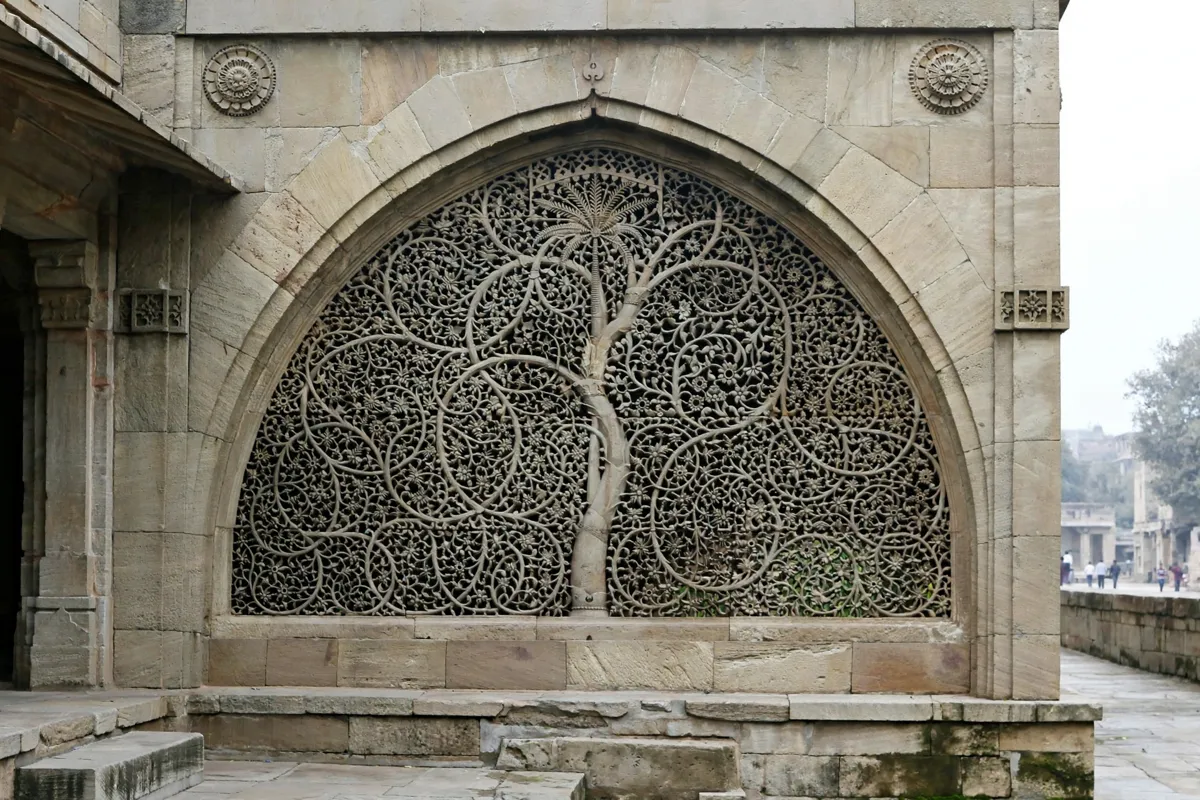
The mosque’s carved stone screens
The stone jalis are the defining feature of Sidi Saiyyed Mosque, with intertwined branches forming a tree-of-life design. Their detailed carving gives the windows a sense of movement while keeping the material and workmanship central to the architecture.
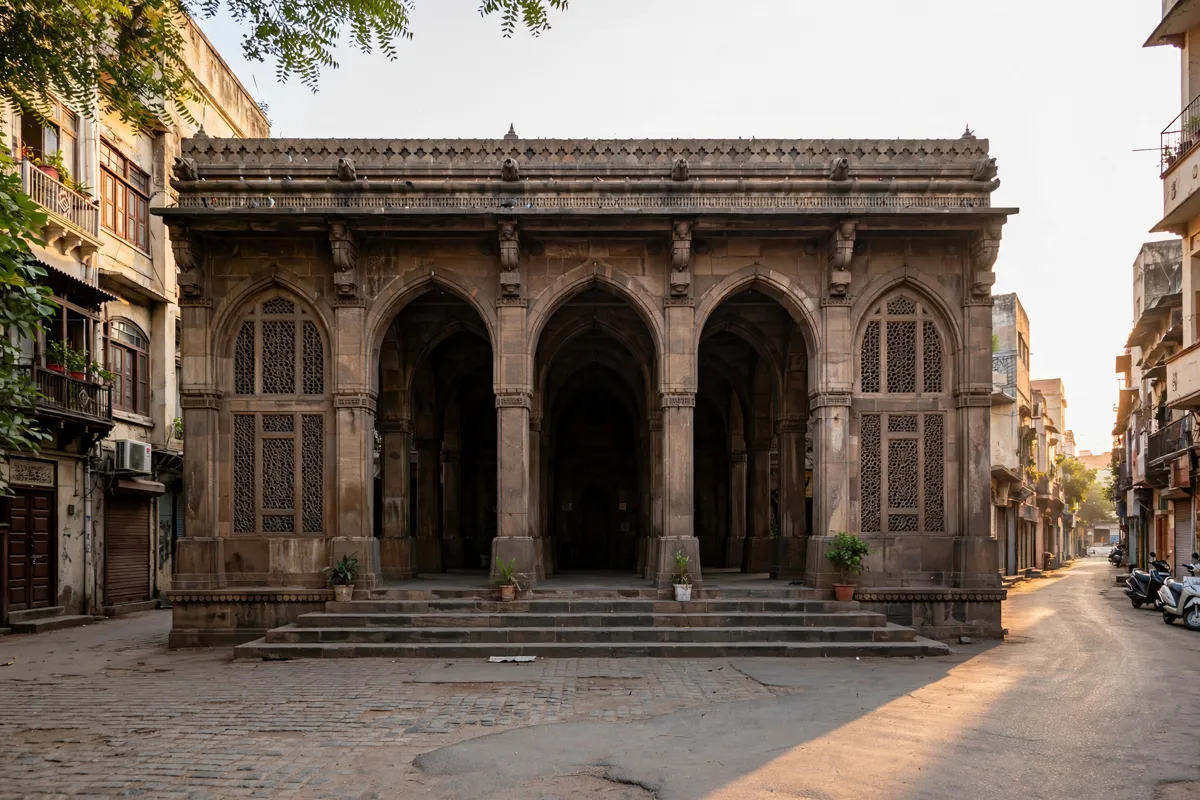
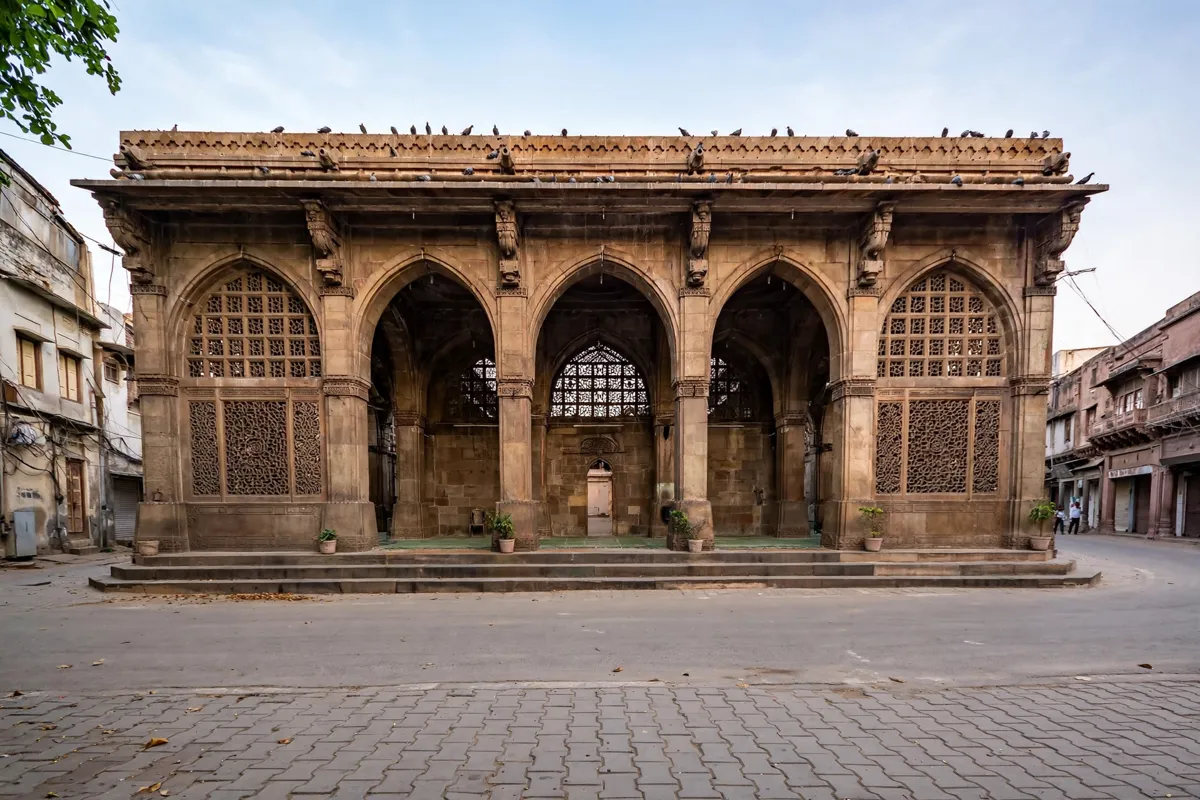
The screens have become an enduring symbol of Ahmedabad; their design also appears in the Indian Institute of Management Ahmedabad logo. Look beyond the most familiar latticework, too: the mosque’s eastern façade includes a mihrab and latticed screens along the walls, while its open front façade is supported by arches.
Two notable perforated windows sit in the back wall, flanked by windows with geometric tracery. The central window arch, by contrast, is walled with stone rather than fitted with a jali. It may not have been completed to plan before the Mughal invasion.
A brief history of Sidi Saiyyed Mosque
Sidi Saiyyed Mosque was completed in 1573 and commissioned by Sidi Saiyyed along Ahmedabad’s city walls during the 16th century. It was the last major mosque built in Ahmedabad under Mughal rule.
The mosque is smaller than Jama Masjid and has no enclosed courtyard. Its open front and stone screens give the building a different architectural character, with the jalis drawing attention to the care invested in the façade.
Bhadra Fort is another historic landmark in the area, so you can pair the mosque with a look at Bhadra Fort’s history and visitor setting.
Visitor etiquette and access
You can visit the mosque daily between dawn and dusk, except during prayers. Entry is free, and the Ahmedabad Municipal Corporation estimates that a visit takes about 30 minutes. Hours and access can be time-sensitive, so check the official site before you go.
As a place of worship, the mosque may be active during your visit. Plan around prayer times and keep your conduct respectful while viewing the architecture. Its smaller scale and lack of an enclosed courtyard make it easy to focus your time on the façades and stonework.
How do you get to Sidi Saiyyed Mosque?
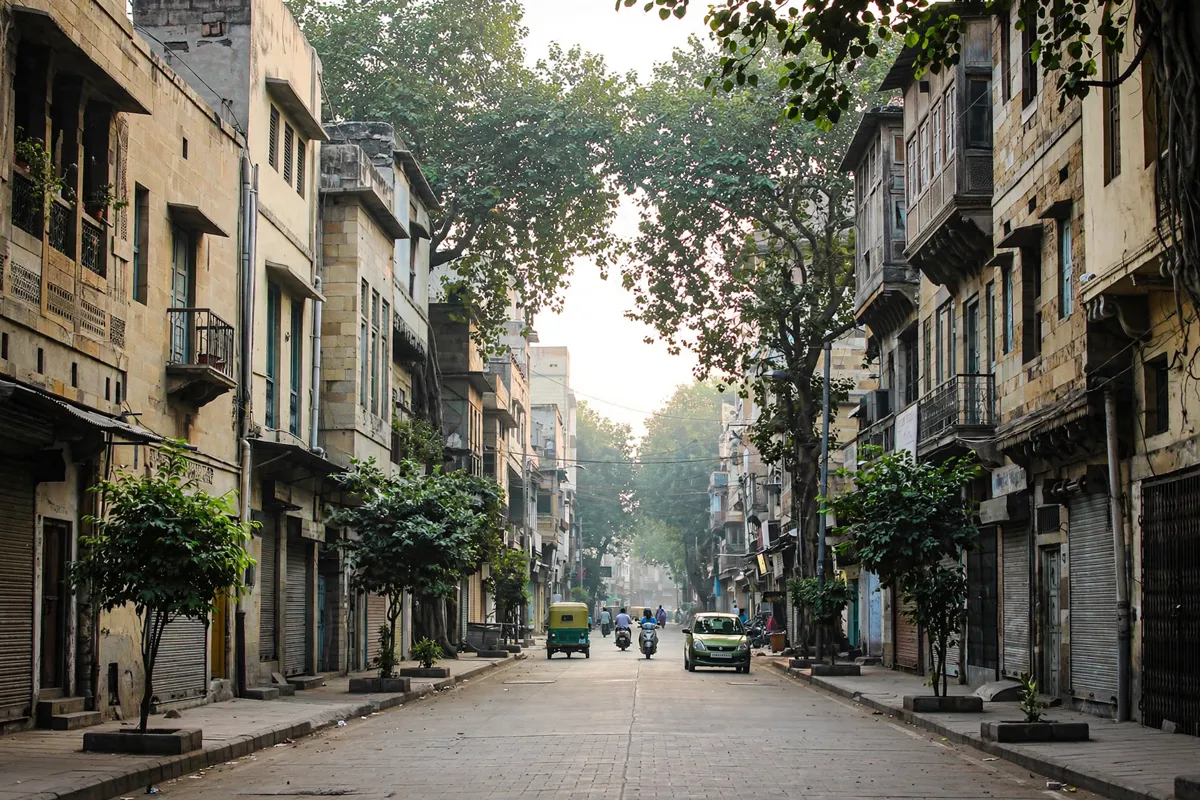
The mosque is on Bhadra Road in Lal Darwaja, about 3 km from Ahmedabad Station. From a three-star hotel in Ahmedabad, it is about a 9-minute drive.
Gujarat Tourism places Sidi Saiyyed Mosque on Bhadra Road, Lal Darwaja.
Bhadra Road puts the mosque within reach of other heritage stops in the historic centre. You can include it in a one-day Ahmedabad Old City itinerary, keeping the prayer-time exception in mind when arranging your visit.
FAQs
What is Sidi Saiyyed Mosque known for?
It is best known for its carved stone lattice windows, or jalis, whose intertwined branches form a tree-of-life design.
When was Sidi Saiyyed Mosque completed?
The mosque was completed in 1573. It was commissioned by Sidi Saiyyed along Ahmedabad’s city walls during the 16th century.
Is there an entrance fee?
Entry is free. The mosque can be visited daily between dawn and dusk, except during prayers.
How long should you allow for a visit?
The Ahmedabad Municipal Corporation estimates that a visit takes about 30 minutes.